Why Most Engineers Fail in Self-Learning Advanced Topics Like Linux Drivers — And How to Overcome It

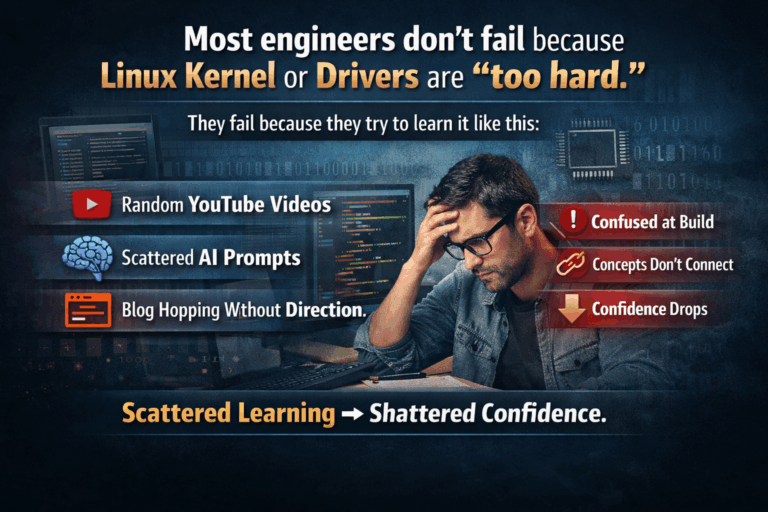
Every year, thousands of engineers decide, “I’m going to learn Linux Kernel / Drivers on my own.” They start:

  • Scouting for books

  • Bookmark tutorials

  • Watch videos

  • Use AI… 

For a few days, they feel productive, feel they have got all the required information

And then? Slowly they start to see:

  • Redundant information

  • Out-of-context explanations

  • Un-structured contents

  • Lack of foundational knowledge.

This is where confusion kicks in as they get overwhelmed at the situation and eventually they stop.

Have you experienced this?… 

But let us tell you: the Problem Is Not Your Effort and Intelligence — It’s the Approach

Raghu Bharadwaj

Known for his unique ability to turn complex concepts into deep, practical insights. His thought-provoking writings challenge readers to look beyond the obvious, helping them not just understand technology but truly think differently about it.

His writing style encourages curiosity and helps readers discover fresh perspectives that stick with them long after reading

Let’s get one thing straight: Learning Linux drivers or any core concepts like Kernel programming or Linux systems programming is not like learning a set of APIs or understanding some random concepts, it is much more than what you see and learn at the surface.

Complex code, abstract concepts and systems you can’t “see” can simply tire and confuse you and this is exactly where most engineers give up.

The real question you should be asking yourself is: 

  • What are the necessary foundational skills that I should know before I start learning?

  • Do I have the necessary mindset and approach to understand these deeper aspects?

  • More than what I read/listened/watched today, should I be worrying about what exactly I added to my current understanding?

  • Did I build on my existing knowledge or is this completely new?

Remember that advanced systems cannot be rushed, there is a particular roadmap: punctuated with understanding, reflecting and relearning aspects which will help you build a concrete understanding

Another key aspect is for you to have a feedback loop, like when you’re stuck, there’s someone like a mentor to guide you through and accelerate your learning. You should have some source to:

  • Correct your thinking, 

  • Tell you what you’re missing

  • Give you the right advice

This support from some authority will help you stay on track and not wander away from the path

Here are few tips to help you stay on course:

  1. Slow Down to Speed Up

Stop trying to cover topics quickly and randomly

Instead:

  • Take one concept

  • Break it down

  • Revisit it multiple times

  • Practically explore the concept to build a clear understanding

Depth beats speed—every single time.

2. Think in Systems, Not Topics

Most of these concepts are connected and unless you start thinking about it as a whole system and not as individual topics you will not get the macro level perspective

3. Ask Better Questions

Every time you get confused or run into some error, ask:

  • Is this concept new, or do I lack the necessary understanding to learn this?

  • Am I guessing here?

  • Why did this program fail, let me trail the execution path and see?

These questions train your mind to think like an engineer.

4. Build a Daily Learning Habit

Not motivation. Not bursts. Just pure Consistency. Even 60–90 minutes of focused effort daily is enough—if done right.

5. Embrace Struggle as Progress

This is important. If you feel: Confused, Slow and Stuck you’re not failing. You’re finally learning something real.

6. Learn With Guidance (Not in Isolation)

Self-learning doesn’t mean learning alone. Having a structured path, a mentor and real-world explanation can reduce months of confusion into clarity.

Final Thought

Most engineers don’t fail because Linux drivers are too hard. They fail because: they try to learn it the same way they learned everything else, but this is different. This requires patience, depth and systems thinking and once you cross that barrier you don’t just learn Linux, you start thinking like a systems engineer.

If you wish, we can guide you with a structured and well-established learning process to help you gain a deeper understanding of Linux device drivers

Keep Learning,

Team TECH VEDA

Recent Posts

Why Learn Linux Kernel Programming in the Edge AI Era?

As the world races into the Edge AI era, the way we build and deploy smart devices is changing rapidly. From intelligent cameras and drones to next-generation industrial automation, modern systems demand not only smarter hardware, but also smarter software. For engineers and enthusiasts stepping into this space, there’s one question that comes up again and again:

“Should I dive straight into Linux device drivers, or start with kernel programming?”

Let’s break down why learning Linux kernel programming first is not just smart—but essential for anyone serious about building robust, efficient, and future-ready Edge AI solutions.

Raghu Bharadwaj

Known for his unique ability to turn complex concepts into deep, practical insights. His thought-provoking writings challenge readers to look beyond the obvious, helping them not just understand technology but truly think differently about it.

His writing style encourages curiosity and helps readers discover fresh perspectives that stick with them long after reading

1. Edge AI: More Than Just Hardware

Edge AI means running powerful machine learning, vision, and data-processing tasks directly on embedded devices—not in the cloud. This brings unique challenges:

  • Real-time responses
  • Huge data streams (think HD cameras, sensor fusion)
  • Tight resource constraints (CPU, memory, power)

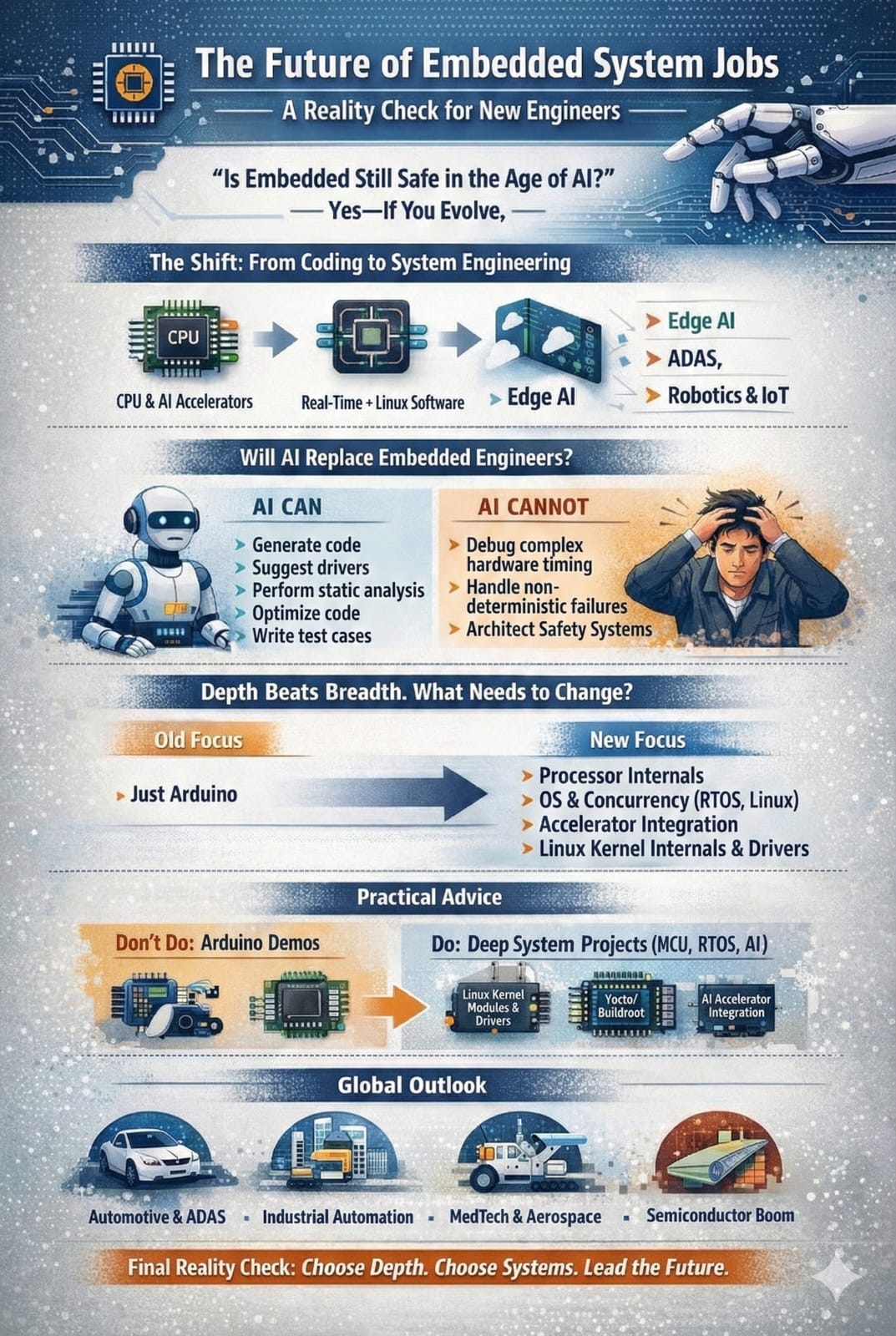
The Linux kernel is the engine room for all of this. If you want your drivers or applications to work efficiently, you need to understand how the kernel manages memory, scheduling, synchronization, and communication beneath the surface.

2. Drivers Stand on the Shoulders of the Kernel
A Linux device driver isn’t magic—it’s a bridge between hardware and the kernel. Writing a driver without knowing how the kernel works is like building a house without understanding its foundation.
Key kernel concepts every Edge AI developer needs:

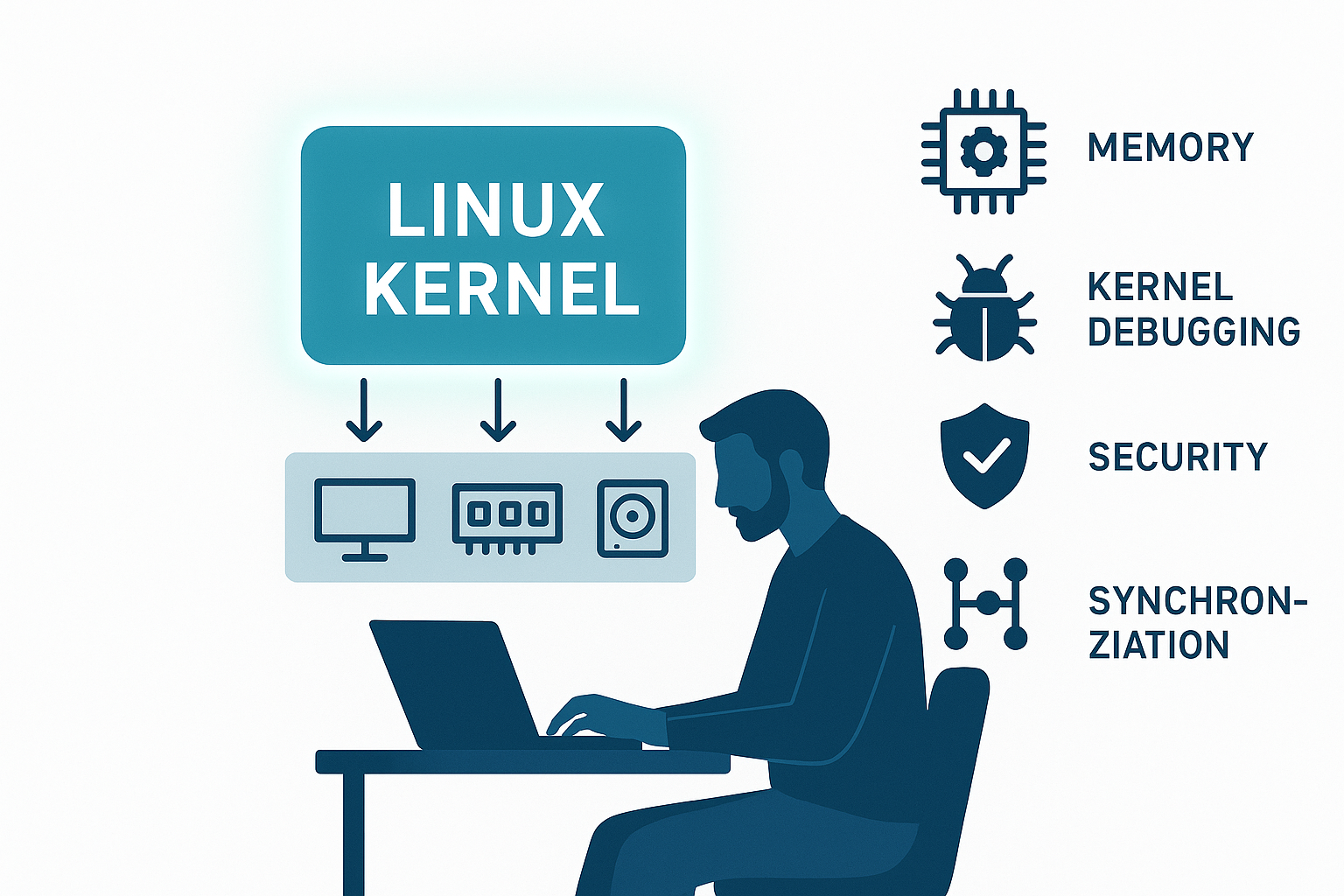
  • Memory Management: Efficient buffer allocation for high-speed data, minimizing latency.
  • Process & Thread Scheduling: Ensuring critical AI inference tasks get CPU time when they need it.
  • Synchronization: Safe sharing of data between AI pipelines, sensors, and user-space apps.
  • Kernel Debugging & Tracing: Tracking performance issues and optimizing bottlenecks.

Mastering these before driver code means your drivers will be more stable, faster, and easier to debug.

3. Edge AI Makes Everything More Intense
In Edge AI, the pressure on your software is higher:

  • Data never sleeps: Drivers may feed real-time video to AI models, or shuttle gigabytes of sensor data per second.
  • Timing is critical: Missed deadlines mean failed inference, lost data, or poor user experience.
  • Bugs can be mission-critical: A race condition or buffer overflow could crash an autonomous robot—not just an app.

Kernel programming teaches you the principles and tools to diagnose, debug, and optimize these challenges. You’ll know how to use ftrace, perf, eBPF, and other tools to see what’s really happening inside your device.

4. Stand Out in the Job Market
Companies building Edge AI, robotics, and next-gen IoT are looking for engineers who “get” the kernel—not just copy-paste driver code.
Why?
Because the best engineers don’t just make things work—they make them work well. If you can diagnose kernel memory issues, optimize latency, or trace mysterious bugs, you’re the one who gets the offer.

5. Your Learning Path: Foundation First, Drivers Next
Think of Linux kernel programming as the “language” of embedded and Edge AI systems. Once you’re fluent, learning to write device drivers is like picking up a new dialect—it’s easier, faster, and much less frustrating.

Recommended roadmap:

  1. Linux Kernel Programming – Learn the “rules of the road” for all advanced Linux work.
  2. Device Driver Development – Apply your kernel knowledge to real hardware.
  3. Edge AI & Embedded Projects – Confidently build, debug, and optimize modern intelligent devices.

Ready to Future-Proof Your Skills?
If you’re serious about building the next generation of Edge AI products, start with the Linux kernel. It’s the rock-solid foundation your entire career will stand on.

Explore our Linux Kernel Programming Foundation Course and join a community of engineers building the future—one line of kernel code at a time.

Recent Posts