Is Embedded Engineering Still Safe? A Complete Career Guide for 2026 and Beyond
- Artificial Intelligence is writing code.
- AI tools are debugging faster.
- Automation is increasing.
So it’s natural for embedded engineers to ask: “Is embedded engineering still a safe career in the age of AI?”
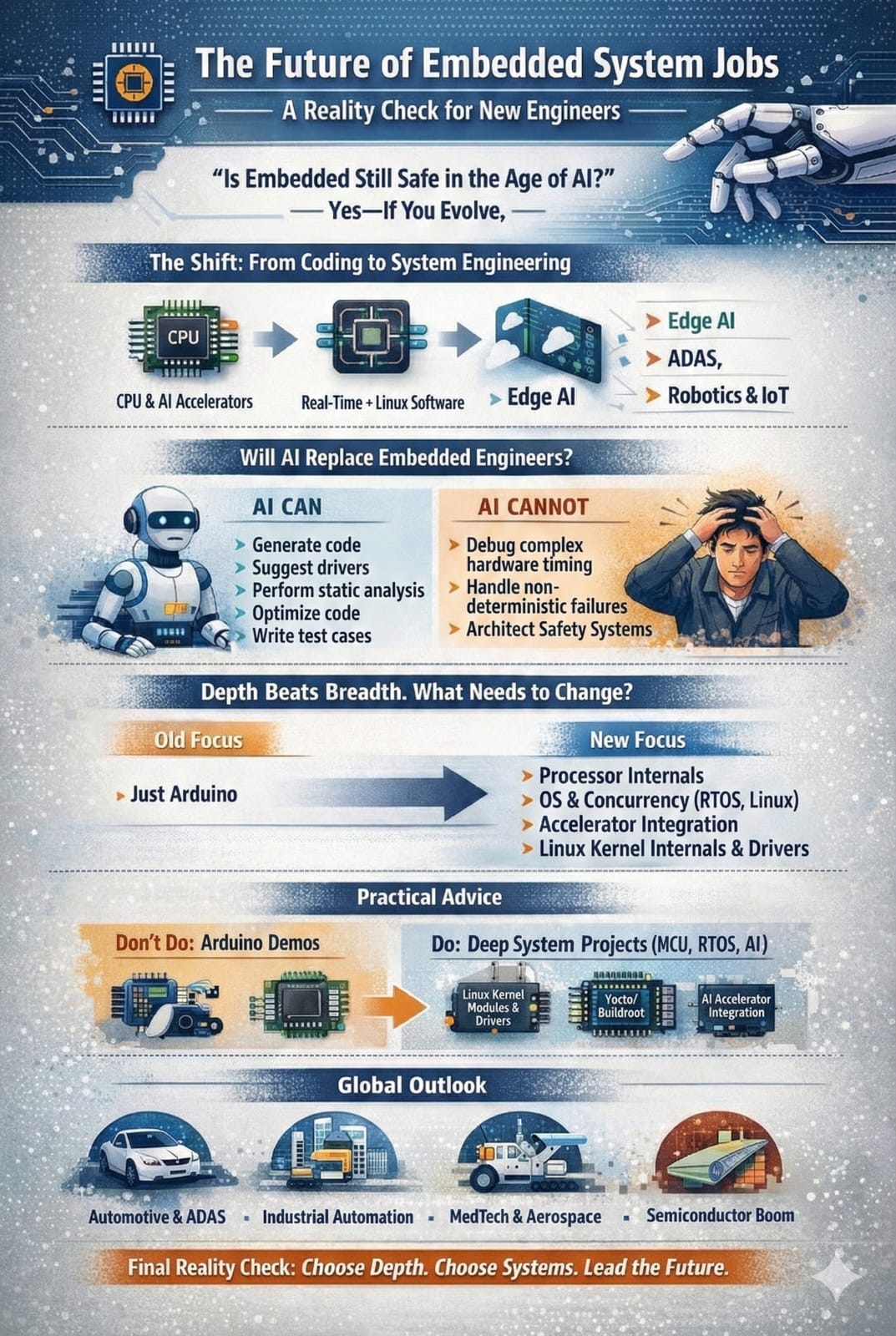
The short answer: Yes — but only if you evolve.
This article attempts at presenting a path for embedded engineers who want to:
-
Stay relevant in the AI era
-
Upgrade their skills strategically
-
Transition from coder to system engineer
-
Build long-term career security
-
Lead in Edge AI and next-gen systems
So if you’re worried about AI replacing embedded engineers, this article can give you the necessary insights on the way ahead.
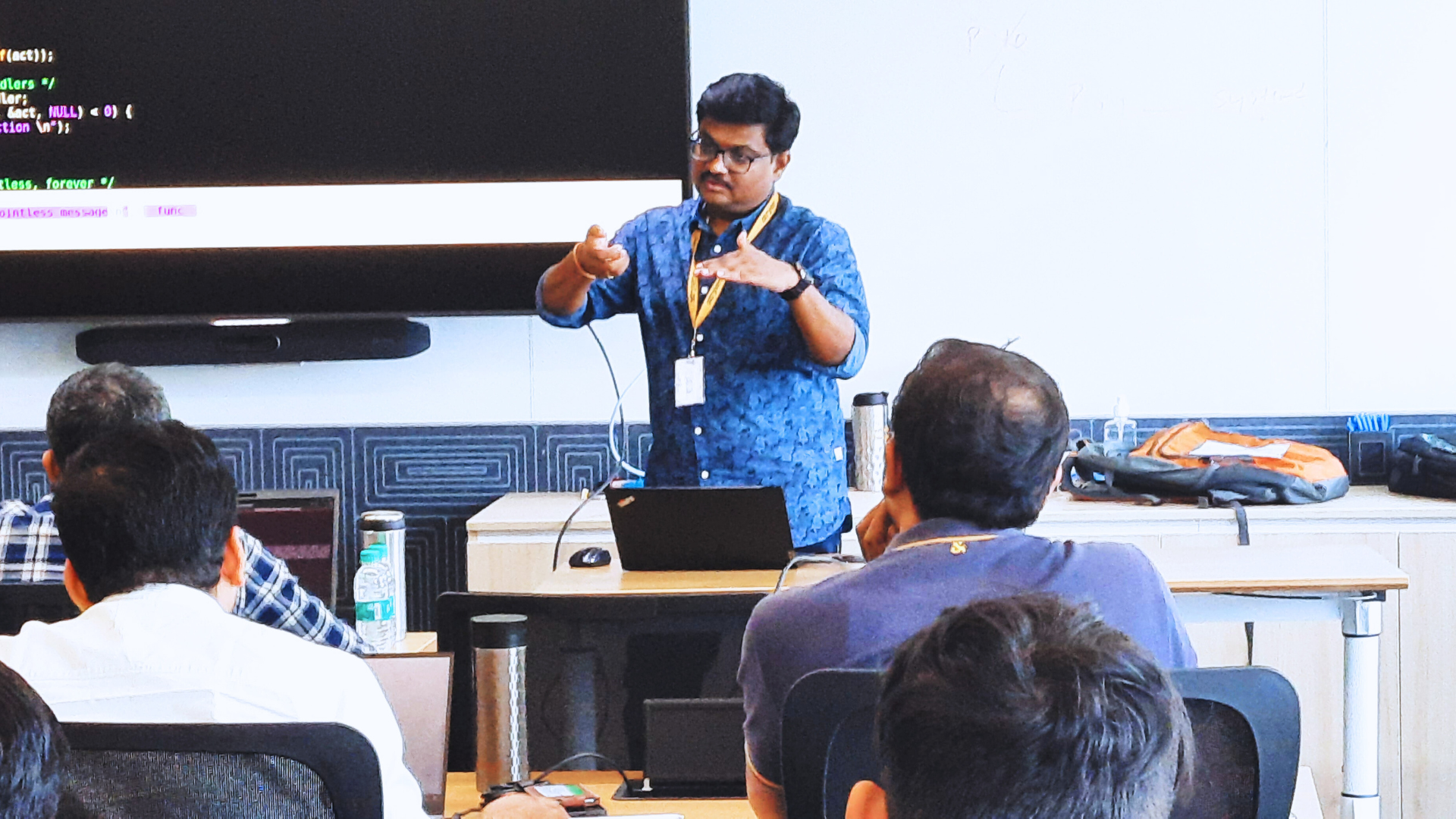
Raghu Bharadwaj
Known for his unique ability to turn complex concepts into deep, practical insights. His thought-provoking writings challenge readers to look beyond the obvious, helping them not just understand technology but truly think differently about it.
His writing style encourages curiosity and helps readers discover fresh perspectives that stick with them long after reading
The Real Shift in Embedded Engineering
The embedded industry is not shrinking, it is transforming.
Earlier, being skilled at:
…was enough.
Today, companies need engineers who clearly understand:
-
System architecture
-
Linux kernel internals
-
Concurrency and synchronization
-
Hardware–software integration
-
Device driver development and optimization
-
AI accelerator integration
-
Deterministic system behavior etc.
The shift is clear:
The future belongs to system engineers — not just coders.
Will AI Replace Embedded Engineers?
Let’s separate hype from reality.
What AI Can Do
-
Generate boilerplate C code
-
Suggest device driver structures
-
Perform static code analysis
-
Optimize algorithms
-
Write unit tests
-
Assist in debugging simple issues
What AI Cannot Do
-
Debug hardware timing issues
-
Diagnose non-deterministic system failures
-
Architect safety-critical systems
-
Handle race conditions in kernel space
-
Understand board-level electrical constraints
-
Make trade-off decisions in real-time systems
-
Take accountability for system failure
Embedded systems deal with:
AI can only generate patterns but embedded engineering requires judgment, where human skills are key. If your skillset is shallow, AI will replace you, but if you build deep understanding AI will amplify you.
Why Embedded Engineering Is Growing — Not Shrinking
The explosion of the following domains ensures long-term demand:
-
Edge AI devices
-
Automotive ADAS systems
-
Robotics and automation
-
Industrial IoT
-
Aerospace systems
-
Medical devices
-
Semiconductor ecosystem
AI models do not run in the cloud alone. They run on hardware — under strict constraints. That hardware needs system engineers.
Depth Beats Breadth in 2026
One of the biggest mistakes engineers make is chasing surface-level exposure.
Learning a little bit of:
-
Arduino
-
Raspberry Pi
-
Python
-
IoT
-
AI tools
…creates resume noise, not career security.
Instead, focus on depth in:
-
ARM and RISC-V architecture
-
RTOS internals
-
Linux kernel internals
-
Device driver development
-
Concurrency
-
Bootloaders
-
Yocto / Buildroot
-
AI accelerator integration
-
Performance profiling
The industry pays for depth.
Career Roadmap for Embedded Engineers (Beginner to Expert)
Here is a sequential path you can follow.
Stage 1: Beginner (0–2 Years)
Focus: Strong Foundations
Learn deeply:
-
C programming (memory, pointers, stack vs heap)
-
Data structures implementation
-
Microcontroller internals
-
Interrupt handling
-
Basic RTOS concepts
-
Compilation and linking process
Avoid:
-
Copy-paste coding
-
Only demo-based projects
Build:
-
Drivers without heavy abstraction layers
-
Simple RTOS scheduler from scratch
-
Hands-on debugging experience
Stage 2: Intermediate (2–5 Years)
Focus: System-Level Thinking
Develop expertise in:
Build:
This stage separates engineers from hobbyists.
Stage 3: Advanced (5–10 Years)
Focus: Architecture & Integration
Master:
-
Multi-core processor systems
-
Heterogeneous compute systems
-
AI accelerator integration
-
Performance profiling
-
Real-time Linux tuning
-
Secure boot and system security
-
Power optimization
-
Safety-critical system design
Build:
-
End-to-end board bring-up
-
System-level debugging ownership
-
Performance optimization strategies
At this stage, AI becomes your assistant — not your threat.
Stage 4: Expert (10+ Years)
Focus: Leadership & System Ownership
Operate at:
-
Full system architecture level
-
Reliability and failure analysis
-
Cross-functional coordination
-
Strategic technical decisions
-
Mentorship and knowledge transfer
These engineers are irreplaceable. AI cannot architect responsibility.
The Psychological Fear: Am I Becoming Obsolete?
Many embedded engineers silently feel:
-
AI writes code faster than me
-
Juniors use AI tools aggressively
-
My skills might become outdated
-
The market is changing too fast
The answer is not panic. The answer is skill upgrade. When you move from: “How do I write this function?” to “How does this system behave under worst-case timing?” …you move into a safer career zone.
Practical Strategy to Stay Relevant in the AI Era
Over the next 3 years:
-
Stop relying only on demo projects
-
Study Linux deeply
-
Learn kernel internals
-
Master concurrency
-
Understand bootloaders
-
Read processor manuals
-
Practice system-level debugging
-
Learn how AI runs on embedded hardware
-
Use AI tools — but verify everything
-
Build real system projects
The embedded engineers who upgrade will thrive. The ones who remain static will struggle.
Embedded Engineering in the AI Age: The Final Truth
Embedded is not dying. Shallow embedded is dying.
The industry is demanding:
-
Deterministic system thinkers
-
Architecture-level engineers
-
Engineers who understand hardware deeply
-
Engineers who can integrate AI at the edge
Skill upgrade is not optional anymore. It is the only path forward. If you choose depth, systems and ownership AI will not replace you. It will multiply you.
Recent Posts